

One redevelopment is chasing rooftops in West Ashley. One land deal is chasing housing policy on the Upper Peninsula. Both are real signals about where capital is actually moving.
TL;DR
- Two verified deals totaling $363 million point to two different theories of where Charleston growth goes next.
- Ashley Landing in West Ashley is a $345 million, Publix-anchored redevelopment with 285 apartments and 100 rental townhomes coming.
- The city's $18 million purchase of 2.4 acres at 899 Morrison Drive targets about 190 mixed-income homes on the Upper Peninsula.
- Buying in a growth corridor is one decision; Homestead Charleston handles the ongoing operations that decide whether the return shows up.
Every week brings another headline about "hot" Charleston submarkets, and most of it is noise — a broker's quote, a speculative rendering, a project that's been "coming soon" for three years. The signal worth tracking is capital that's already been committed, with a number attached and more than one source confirming it. Right now, two very different deals meet that bar, and reading them together says more about where Charleston investment is headed than either one does alone.
The $345 Million Bet: West Ashley's Anchor-Tenant Play
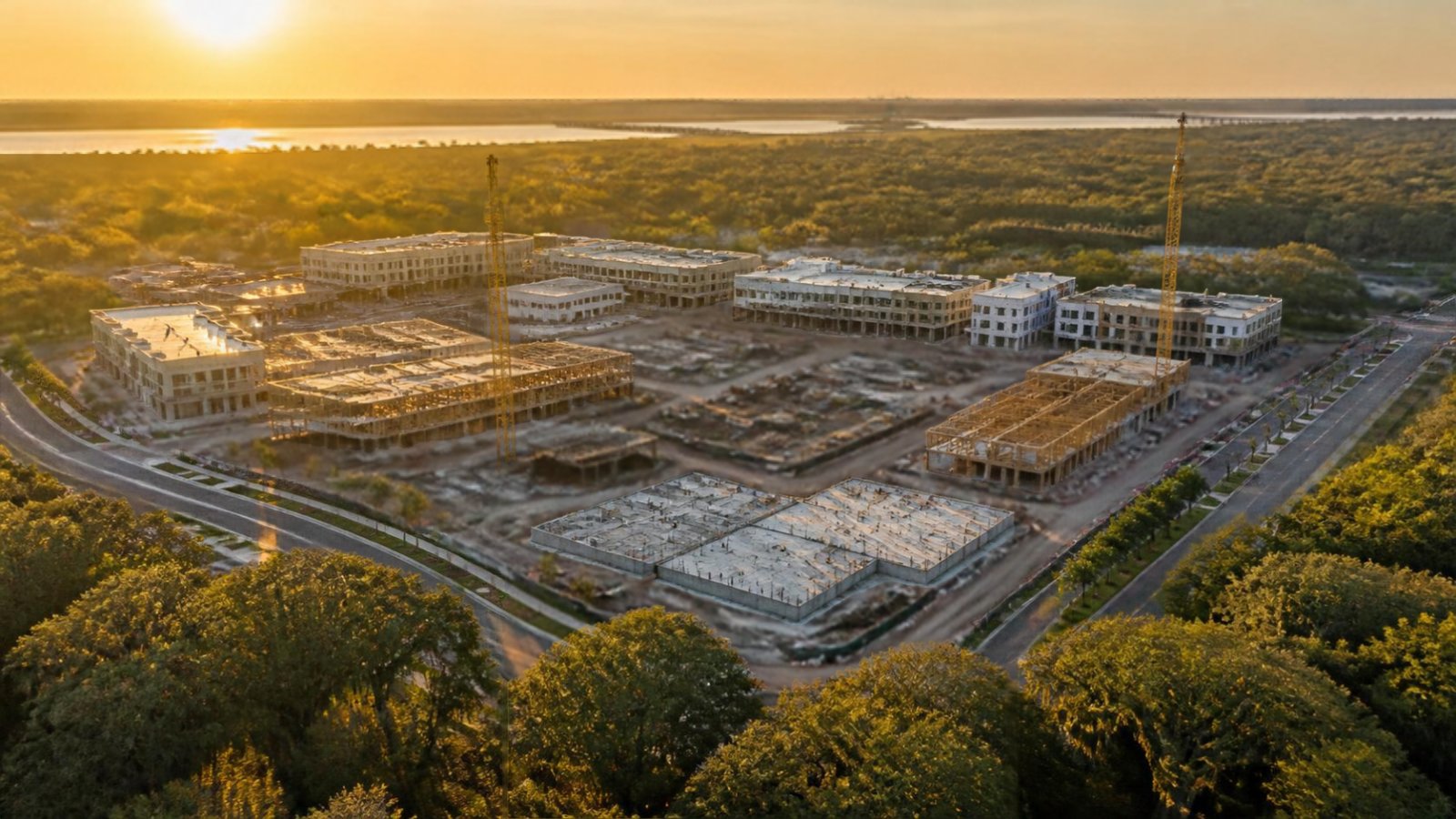
Ashley Landing, the long-running shopping center redevelopment in West Ashley, has a confirmed price tag of $345 million — roughly $300 million from EDENS and another $45 million from the City of Charleston. Crews are currently installing major underground stormwater infrastructure, with that phase expected to wrap by the end of this year. The project pairs a new 50,000-square-foot Publix opening in late summer 2027 with roughly 240,000 square feet of additional retail, Woodfield Development's 285-unit Westbourne Ashley Landing apartment community targeting a Q3 2028 delivery, and 100 rental townhomes from Material Capital Partners arriving by late 2028.
This is a textbook anchor-tenant-driven redevelopment: a grocery commitment de-risking the retail component, multiple residential developers building around it, and a municipal contribution signaling the city sees enough long-term value to co-invest in the infrastructure. For investors, the read is straightforward — West Ashley is getting a multi-year runway of rooftops, retail traffic, and rental demand concentrated around one corridor, on a timeline measured in years, not quarters.
The $18 Million Bet: Policy-Driven Land on the Upper Peninsula
The second deal is smaller in dollars but arguably just as telling. The City of Charleston closed on an $18 million purchase of 2.4 acres at 899 Morrison Drive on August 31, part of Mayor William Cogswell's Project 3500 initiative to add 3,500 affordable housing units by 2032. The site, purchased from the International Longshoremen's Association and funded through tax increment financing proceeds, is slated for roughly 190 mixed-income homes, with design contracts expected to be awarded later this year.
"One deal is chasing a grocery anchor. The other is chasing a housing mandate. Both are telling you where the next five years of demand gets built."
Where Ashley Landing is privately led with public participation, Morrison Drive is publicly led — a direct, TIF-funded move by the city to control land use outcomes on the Upper Peninsula ahead of private capital getting there first. That's a meaningfully different kind of signal. It tells investors that the city is actively shaping the supply picture in a corridor that's already seeing private interest, which changes the calculus for anyone evaluating land or existing assets near Morrison Drive, Huger Street, and the broader upper peninsula and Eastside submarkets.
Reading the Two Together
Neither deal exists in isolation. A $345 million grocery-anchored redevelopment in West Ashley and an $18 million city-led affordable housing acquisition on the Upper Peninsula represent two different theories of where Charleston growth goes next — one betting on suburban rooftops around a retail anchor, one betting that the city itself will shape supply near the urban core before the market does it on its own terms. Investors who are only watching one side of that ledger are missing half the picture. The corridors getting public dollars alongside private capital — whether it's a stormwater assist in West Ashley or a TIF-funded land purchase on the peninsula — are the ones where the next wave of rental demand is most likely to land first.
What the Headlines Never Mention
Here's the part that neither press release covers: buying into a corridor before it fully matures is a single decision, made once, at closing. Managing what you buy there — every lease, every make-ready, every vendor call — is a decision you make over and over for as long as you hold the asset. Investors routinely underprice that second decision when they're building their return model off the first one. A property in a corridor with $345 million of visible momentum still needs a leasing plan, a maintenance standard, and someone answering the phone when a tenant has a problem at 9 p.m. That operational reality doesn't show up in a development announcement, but it shows up in every actual return.
Where Homestead Charleston Fits
This is where Homestead Charleston operates — not in the capital decision, but in the operational one that follows it. We manage single-family rentals across the Charleston metro, including the corridors named above, for a flat 15 percent of rent collected, with no markups added to vendor invoices and no incentive pointing anywhere except toward what performs for the owner. For an investor buying into West Ashley's momentum or positioning near the Upper Peninsula's next chapter, that means the property gets the same local knowledge and fiduciary standard whether the asset is brand new or already twenty years old.
Capital tells you where to buy. It's never told anyone how to run what they bought. That's a separate skill, and it's the one that actually determines whether a well-placed investment turns into the return the announcement implied. The rental income. Not the landlord life.
About the author
Mike Wood is the owner and Property Manager-in-Charge of Homestead Charleston LLC (PMIC License #145042), a boutique rental property management firm based on Daniel Island, SC. mikewood@homesteadcharleston.com