

No billion-dollar peninsula megaproject this week — just three verified, mid-size deals that show exactly where local capital is placing its bets right now.
TL;DR
- Three verified deals totaling $48.9 million show capital moving on three different clocks.
- RCB Development paid $9.3 million for an 85,401 sq ft industrial building near the Wando Welch Terminal.
- Charleston approved $33.4 million for a West Ashley municipal building; a $6.2 million King Street sale-leaseback shows downtown confidence.
- The pro forma never shows operational drag; Homestead Charleston manages what you buy once the deal closes.
Most weeks, Charleston development news means a nine- or ten-figure number attached to a name like Magnolia Landing or Project 3500. This week is different, and that's precisely why it's worth reading closely. Three separate, verified transactions closed or cleared final approval in the past two weeks, none of them big enough to make a national headline, all of them specific enough to tell you something a billion-dollar announcement usually can't: exactly which kind of capital is moving into which kind of asset, and why.
The Anchor: Industrial Capital Bets on the Port
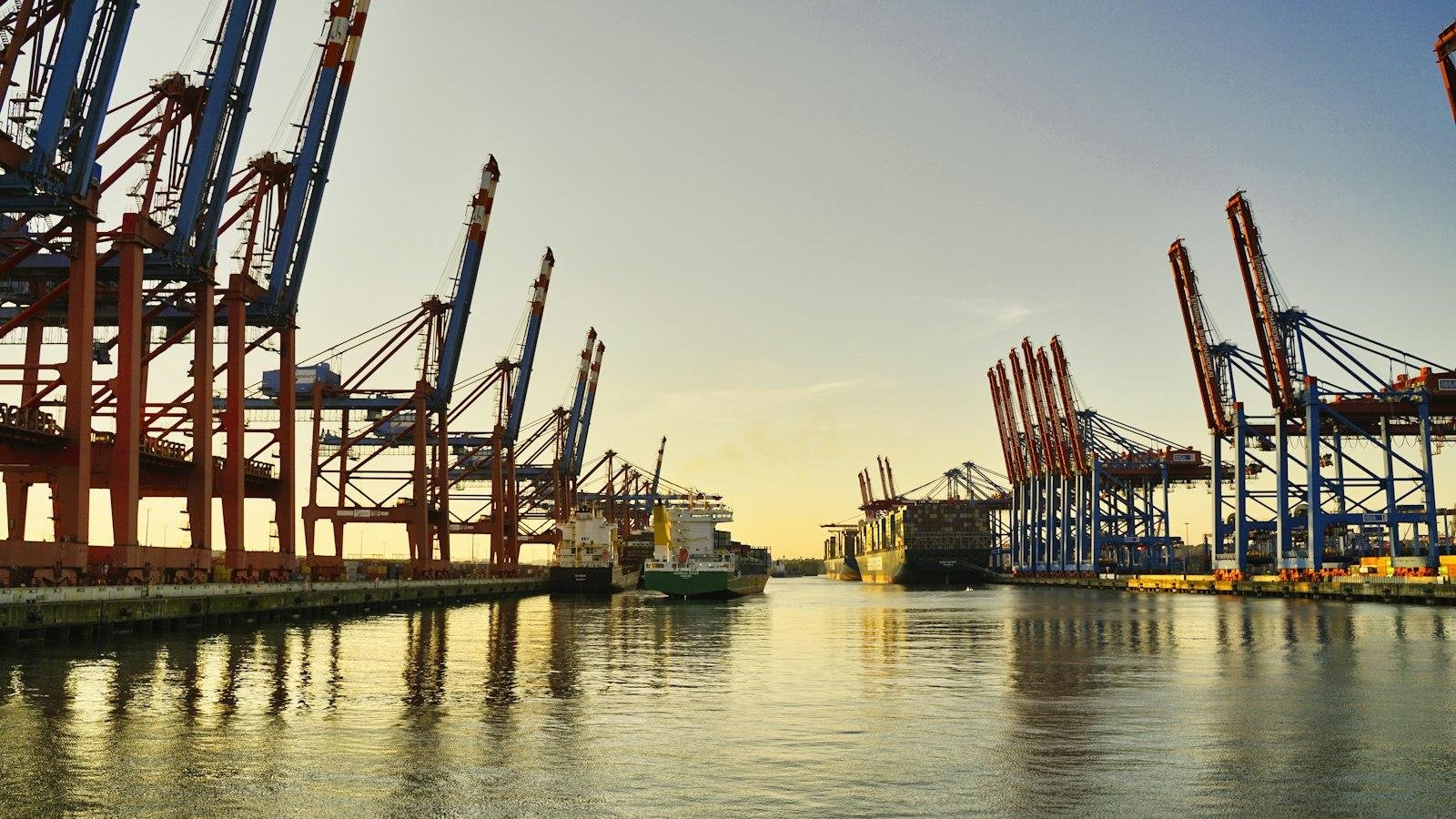
On September 24, the Post and Courier confirmed that Charleston-based RCB Development paid $9.3 million for an "underutilized" industrial building at 476 Long Point Road in Mount Pleasant — 85,401 square feet on 4.6 acres, sitting near the Wando Welch Terminal and Interstate 526. RCB's plan is straightforward: facade and deferred-maintenance repairs, new drive-in doors, updated landscaping and signage, then lease it out in configurations as small as 6,000 square feet. That's not a speculative land bet. It's a bet that port-adjacent industrial space, even in a dated building, is worth more improved than it is untouched — a wager on continued freight and logistics demand out of one of the busiest container ports on the East Coast.
The Policy Signal: Public Money Follows Population
Two weeks earlier, on September 12, Charleston City Council approved a $33.4 million guaranteed maximum price for the city's first dedicated West Ashley municipal office building — 49,000 square feet on Ingram Road, across from Ashley Landing, replacing a demolished mid-century chapel and former assisted-living center. Mayor William Cogswell framed the move around where the city's residents and workforce actually live now, not where City Hall has traditionally sat. The building has to be finished by July 2028, when Charleston's downtown lease runs out, with a second phase already planned for the mid-2030s. Separately, North Charleston finished the framework for its new Unified Development Ordinance on September 25 — the rulebook rewrite that will eventually govern zoning and subdivision approvals citywide, with public sessions scheduled for October before drafting begins in earnest.
Neither of those is a private capital story, but both are leading indicators for where private capital tends to follow. A city investing $33.4 million to permanently relocate government infrastructure into West Ashley is a fairly direct signal about where it expects long-term residential and commercial density to concentrate. A regulatory rewrite in North Charleston is the kind of thing that reshapes what's buildable — and where — for the next decade, well before most investors are paying attention to it.
The Long-Horizon Signal: Legacy Capital Consolidates Downtown
The third data point is smaller in dollar terms but just as telling. On September 19, the Post and Courier reported that Eddie Buck, owner of the Bluewater gas station chain, closed on 312 King Street — a three-story, 1880s building currently leased to Hampden Clothing — for $6.2 million in a sale-leaseback structure. The tenant stays exactly where it is; only the ownership changes. It's Buck's fourth King Street property, joining existing holdings at 275, 184, and 463 King. That's not a developer chasing a new project. That's a local operator with deep market knowledge quietly building a downtown retail-real-estate position, one stabilized, income-producing building at a time.
A billion-dollar headline tells you where the market's excitement is. A $6.2 million sale-leaseback tells you where the market's confidence is — and those aren't always the same corridor.
Reading the Pattern, Not Just the Deals
Put together, these three deals map a market moving on three different clocks. RCB is betting on months-to-years industrial demand near infrastructure that already exists. The city is betting on a decade-long shift in where Charleston's population center of gravity sits. And Buck is betting on downtown King Street holding its value indefinitely, the way it already has for decades. None of that requires a mega-project to be true, and none of it shows up if you're only scanning headlines for the next ten-figure announcement.
Here's the part the development coverage never gets to: buying into any one of these three corridors — port-adjacent industrial, growth-anchored West Ashley, or legacy downtown retail — is a single decision made once. Managing what you actually bought is a decision made every month after that, for as long as you own it. Investors routinely underprice this. A pro forma built on market rent and a cap rate says nothing about vendor coordination, tenant turnover, or a slow-leaking roof nobody caught for three weeks — and the gap between the modeled return and the realized one is almost always explained by exactly that kind of operational drag, not by the deal itself.
That's where Homestead Charleston enters the picture for investors reading news like this. The fee structure is a flat 15 percent of rent collected, with no vendor markups layered onto repair invoices and no incentive to let a small maintenance item sit until it's an expensive one. For an out-of-market or simply time-constrained investor evaluating any of these corridors, that's the difference between a return that exists on a spreadsheet and one that shows up in the bank account every month.
The capital is already moving. The question worth asking isn't only where to put yours next — it's who's going to manage what you buy once the deal closes.
The rental income. Not the landlord life.
About the author
Mike Wood is the owner and Property Manager-in-Charge of Homestead Charleston LLC (PMIC License #145042), a boutique rental property management firm based on Daniel Island, SC. mikewood@homesteadcharleston.com
Photo: Unsplash — photo by Foto K.